


Most people assume poor health begins with disease - a diagnosis, a symptom that finally demands attention. But biology usually starts breaking down long before that moment arrives.
It begins quietly, when the body struggles to maintain strong teeth, stable bones, resilient immunity, balanced hormones, and reliable reproduction. These changes are often dismissed as normal aging, stress, or bad luck. In reality, they’re early signs that the body is no longer getting what it needs to repair, rebuild, and sustain itself.
Nearly a century ago, this slow unraveling was documented with unusual clarity and detail by Francis Pottenger Jr. His work didn’t focus on treating disease. It focused on something more fundamental: what happens to a body over time when food is sufficient to keep it alive but inadequate to fully support structure, repair, and reproduction.
Over the course of roughly ten years, Pottenger observed more than 900 cats - across their full lifespans and through multiple generations. What he documented in those cats helps explain why so many people today feel their health slipping, even when they appear to be doing everything “right.”

What the Cats Were Fed
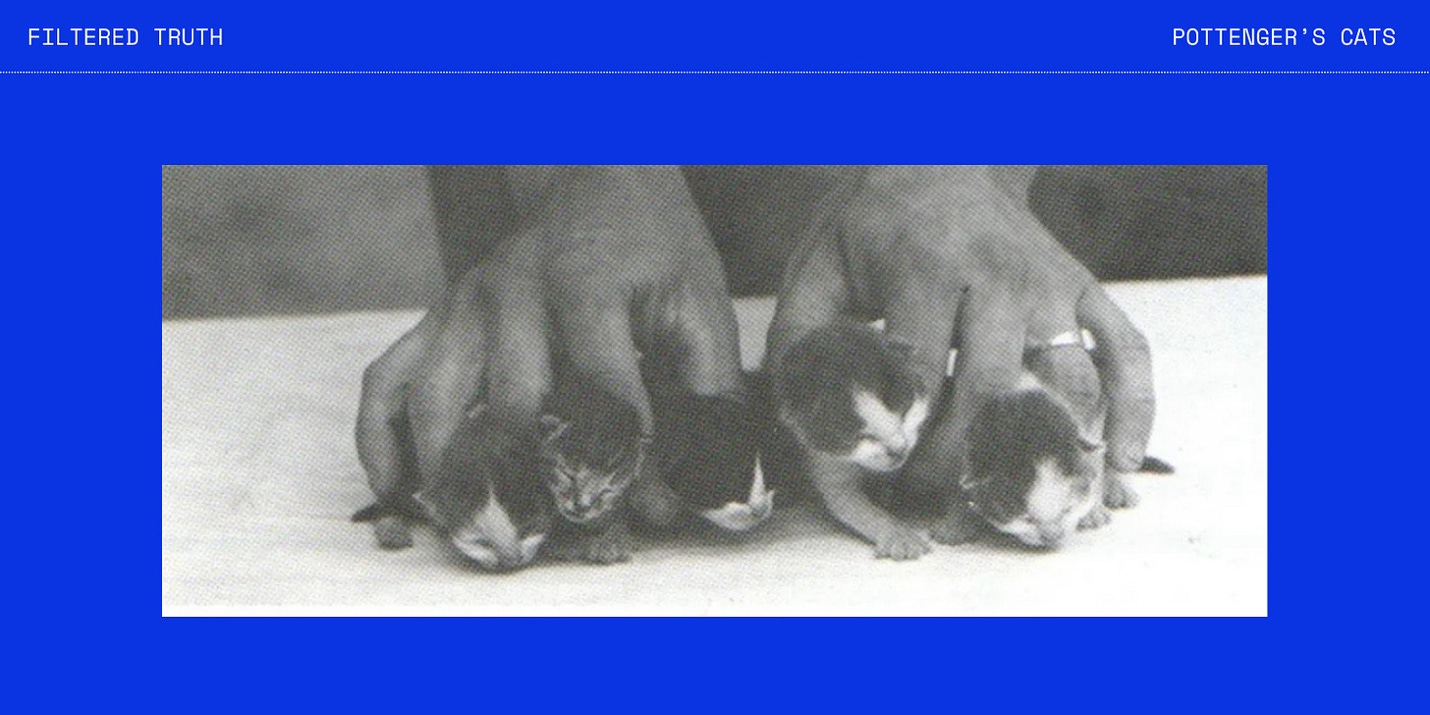
All of Pottenger’s cats were fed enough food to grow and survive. None were starved. Housing and care were identical. The only meaningful difference was how the food was prepared.
One group ate:
Raw muscle meat, including natural connective tissue and organs
Raw milk
Cod liver oil
Another group ate:
Cooked muscle meat
Pasteurized milk
Cod liver oil
On paper, both diets appeared reasonable: calories were available, protein was present, and vitamins were assumed to be covered. But over time, the bodies revealed a truth that nutrition labels could not.
Results: Unprocessed Food Group
The cats fed unprocessed animal foods maintained strength and stability throughout their lives and across generations. Observed findings included:
Normal body size, strength, and coordination
Strong bones and stable skeletal structure
Wide dental arches with straight teeth
Strong resistance to infections
Calm behavior and stable temperaments
High fertility with healthy pregnancies
These cats aged, but they did not progressively fall apart. Their bodies were able to repair, maintain, and reproduce because the inputs required for those processes were consistently present.

Results: Processed Food Group

The first generation fed heat-processed food did not appear dramatically ill. They grew, lived, and functioned - much like many people today. But over time, physical stress began to show up across multiple systems. Observed findings included:
Gum inflammation and early tooth decay
Poorer skin and coat quality
Increased infections and parasitic illness
Allergy-like and inflammatory conditions
Behavioral changes such as nervousness or irritability
Reproductive difficulty, including miscarriages
These bodies were functioning, but they were no longer robust. Maintenance was becoming harder. Repair was less efficient. Reproduction was no longer reliable. This is what early degeneration looks like: not dramatic illness, but a steady loss of resilience.

The second generation was conceived and raised entirely on cooked food. At this point, physical decline was no longer subtle. Findings included:
Narrow skulls and underdeveloped jaws
Worsening dental decay and crowded teeth
Weakened bones and early arthritis
Poor growth and reduced body size
Chronic infections and immune weakness
Further reduction in fertility and difficulty conceiving
Here, the body was no longer just struggling to maintain itself. Structure itself was compromised. Bones, teeth, immune function, and reproductive capacity all showed signs of failure.

By the third generation, the system could no longer compensate. Findings included:
Near-total infertility
Severe failure to thrive
Progressive systemic illness
Profound physical degeneration
Offspring born extremely weak or malformed
There was no single toxin. No dramatic collapse. Just the cumulative effect of food that kept bodies alive while failing to support ongoing repair and renewal. Reproduction stopped because biology could no longer sustain itself.

Attempts at Recovery
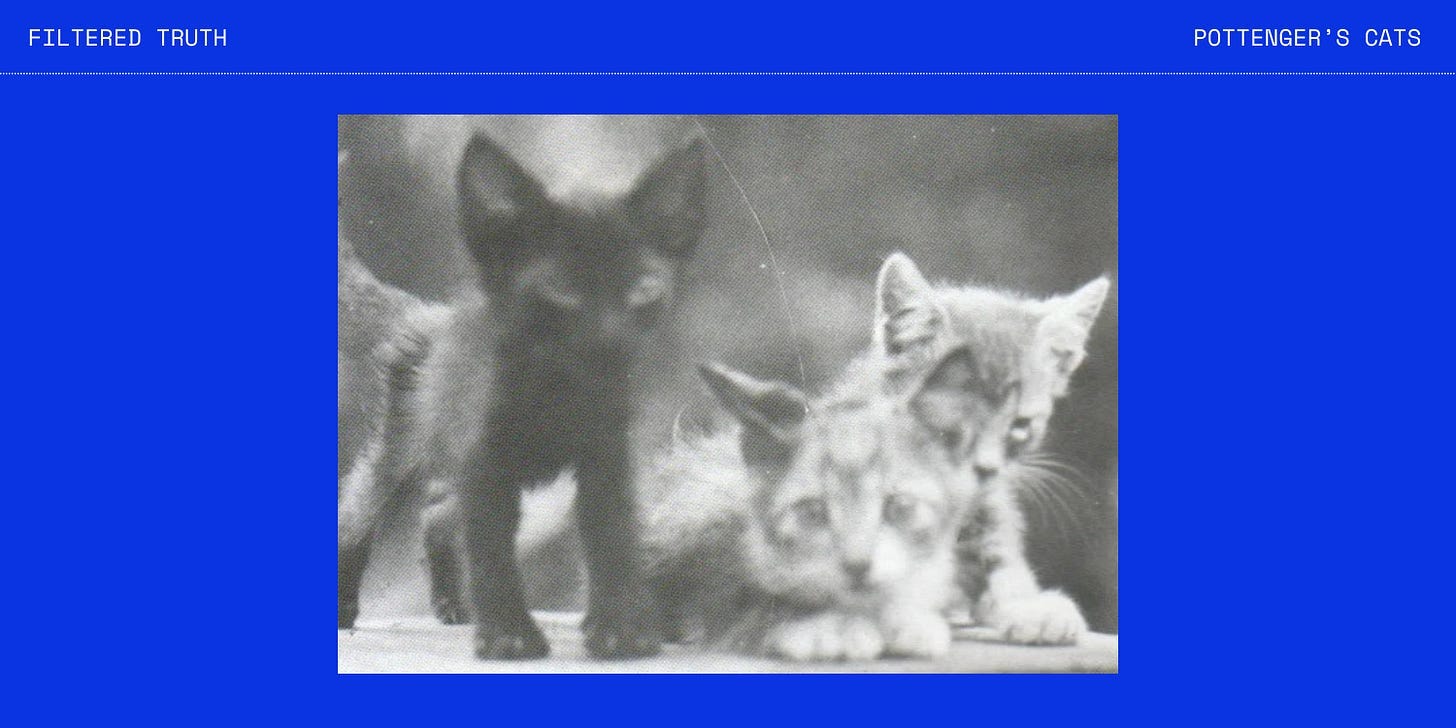
When some cats were returned to unprocessed animal foods, improvement did occur - but it unfolded gradually. Physical condition strengthened over time, and fertility partially returned. In some lineages, multiple generations were required before health began to resemble the original baseline.
This mattered. It showed that biology retains a memory of how to build well - but it also works on a longer clock than we tend to expect. Structure, resilience, and reproductive capacity take time to rebuild once they’ve been compromised.
The encouraging part is this: the system remained responsive. When conditions improved, the body recognized them and adjusted. Recovery followed the same rules as development - quiet, cumulative, and shaped by steady support rather than quick fixes.
Seen this way, the study is both a warning and a reassurance. When conditions improve, biology responds, but it does so at the pace required to rebuild what takes time to grow.

Why This Should Matter to You
Pottenger’s work doesn’t tell humans to eat like cats. It shows something more important: biology responds to food based on its ability to support maintenance, repair, and reproduction - not just survival.
Today, many conditions we accept as “normal” mirror what he documented:
Dental decay and gum disease despite good hygiene
Crowded teeth and compromised oral structure
Chronic skin conditions and allergies
Immune dysfunction and frequent illness
Thyroid and metabolic disturbances
Joint pain, arthritis, and skeletal fragility
Anxiety, irritability, and reduced stress tolerance
Rising infertility and pregnancy complications
Like the early generations of cats, many people still function. They work. They raise families. Lab values may even look acceptable. But resilience is lower. Repair is slower. Degeneration starts earlier.

Pottenger’s cats demonstrate a reality we often resist:
A body can survive for years while quietly losing its ability to stay strong, resilient, and reproductively healthy.
Degeneration does not begin with disease. It begins when nutrition no longer supports the ongoing work of repair, structure, and renewal. And what we normalize in ourselves becomes the foundation our children are built on.
Nutrition is not a trend or a lifestyle choice. It is a biological requirement - for healthy teeth, strong bones, resilient immunity, balanced hormones, and the ability to pass health forward. The experiment has already been run. The pattern is clear. The question is whether we’re willing to pay attention in time.
To kickoff this year, we’ll be looking at nutrition through this lens - not to moralize, restrict, or perfect, but to understand how ordinary choices shape long-term biology.
Stay tuned.